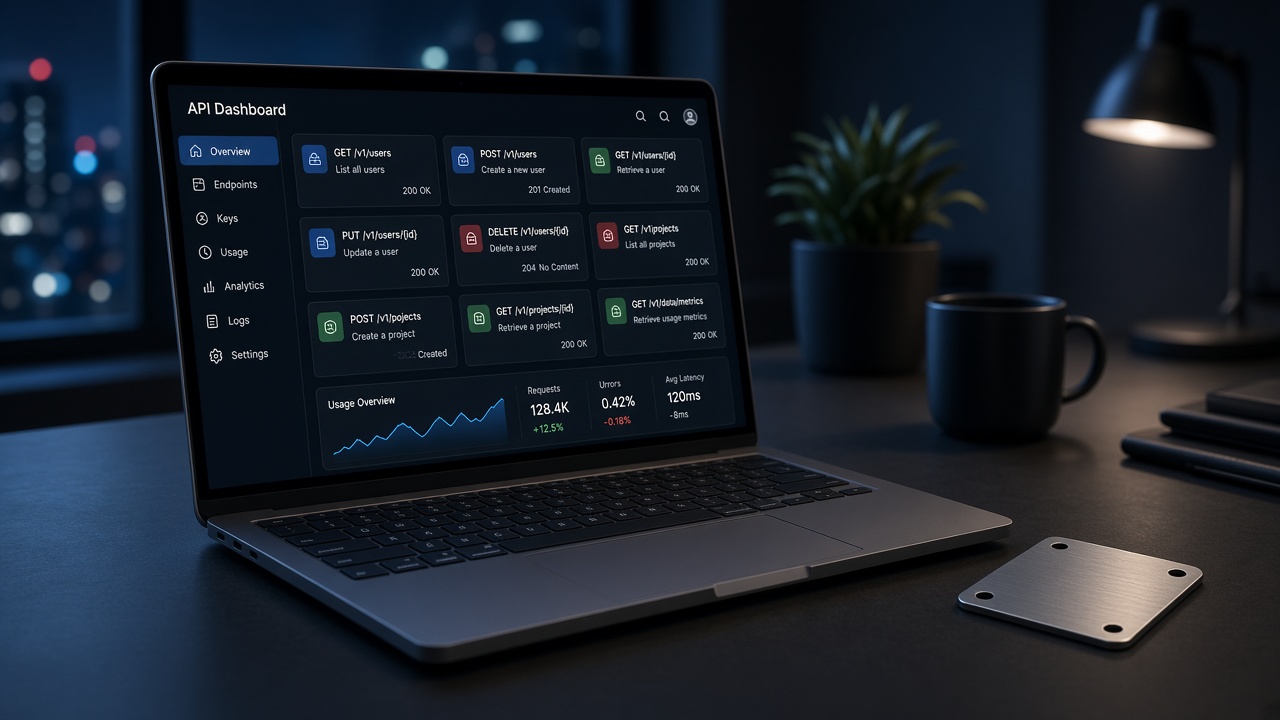
Best Vocal & Speech Technology APIs: Zyla API Hub vs Banana.dev 2025
In the rapidly evolving landscape of vocal and speech technology, businesses are increasingly relying on APIs to enhance user experience and accessibility. The integration of speech technology APIs allows developers to create applications that can understand and generate human speech, making interactions more intuitive and efficient. This blog post will delve into the top-performing speech technology APIs available on Zyla API Hub and Banana.dev, comparing their features, performance metrics, and real-world applications. We will focus on key aspects such as API uptime, ease of use, documentation quality, support responsiveness, and developer feedback, ultimately highlighting why Zyla API Hub may be the superior choice in 2025.
Understanding the Need for Speech Technology APIs
As businesses strive to improve customer engagement and accessibility, the demand for speech technology APIs has surged. These APIs solve several critical challenges:
- Accessibility: Speech technology APIs enable applications to cater to users with disabilities, allowing for voice commands and text-to-speech functionalities.
- Efficiency: Automating transcription and voice synthesis can significantly reduce the time and resources spent on manual processes.
- User Engagement: Integrating voice capabilities enhances user interaction, making applications more engaging and user-friendly.
Without these APIs, developers face challenges such as high development costs, extended timelines, and the complexity of building robust speech recognition and synthesis systems from scratch. By leveraging existing APIs, businesses can focus on their core functionalities while enhancing their applications with advanced speech capabilities.
Overview of Speech Technology APIs
In this section, we will explore the key speech technology APIs available on Zyla API Hub and Banana.dev, detailing their features and capabilities.
1. Speech to Text API - English
The Speech to Text API - English is a powerful tool that converts spoken English audio into text format. This API is ideal for applications requiring voice-to-text functionality, enhancing user accessibility and interaction.
Key Features and Capabilities:
- Convert: This feature allows the API to transcribe any spoken English audio into text. It supports various audio file types, including mp3, Ogg, Wav, m4a, and WMA, with a maximum length of 1 minute.
Example Response:
{
"message": "Response is not available at the moment. Please check the API page"
}
This feature is valuable for developers as it enables the creation of applications that are more inclusive and accessible, particularly for users with disabilities. For instance, call centers can utilize this API to transcribe customer interactions, improving service quality and documentation.
Frequently Asked Questions:
Q: How is data accuracy maintained?
A: Data accuracy is maintained through advanced speech recognition technology that adapts to various accents and speaking styles.
Q: What are typical use cases for this API?
A: Typical use cases include call center transcriptions, meeting notes, personal note-taking, and voice-activated applications.
2. English Text to Speech API
The English Text to Speech API allows developers to convert written text into spoken words, supporting multiple languages and applications for speech synthesis and accessibility.
Key Features and Capabilities:
- Convert: This feature converts written text into audio, providing a URL for the generated MP3 file. Users can customize the voice gender (male, female, or neutral) and choose between standard and premium voices.
Example Response:
{
"message": "Response is not available at the moment. Please check the API page"
}
This API is particularly useful for creating audio content for visually impaired users or generating voiceovers for educational materials. By integrating this API, developers can enhance the accessibility of their applications.
Frequently Asked Questions:
Q: What are typical use cases for this API?
A: Typical use cases include creating audio for accessibility features, generating spoken content for educational materials, and producing audio clips for podcasts or video presentations.
3. English Speech to Text API
The English Speech to Text API transcribes audio into text, filtering unnecessary filler words for cleaner output.
Key Features and Capabilities:
- Submit Files for Transcript: This feature allows users to upload audio files for transcription, returning the cleaned text output.
Example Response:
{
"audio_file": "https://example.com/audio.mp3",
"output": {
"text": "Meeting notes for the project discussion."
}
}
This API is beneficial for businesses that need to document meetings or customer interactions quickly. By automating transcription, companies can save time and improve accuracy.
Frequently Asked Questions:
Q: How can users effectively utilize the returned data?
A: Users can integrate the transcribed text into applications for documentation, analysis, or search functionalities.
4. British Text to Speech API
The British Text to Speech API converts written text into spoken words with a natural British accent, enhancing user engagement.
Key Features and Capabilities:
- Convert: This feature allows users to convert text into audio, providing a URL for the generated MP3 file. Users can select the voice gender and choose between standard and premium voices.
Example Response:
{
"message": "Response is not available at the moment. Please check the API page"
}
This API is particularly useful for applications targeting British audiences, such as e-learning platforms and virtual assistants.
Frequently Asked Questions:
Q: What are typical use cases for this API?
A: Typical use cases include creating audiobooks, enhancing e-learning materials, and developing virtual assistants.
5. Text to Speech API
The Text to Speech API allows developers to convert written text into spoken words in multiple languages, supporting various applications.
Key Features and Capabilities:
- Convert: This feature converts text into audio, providing a URL for the generated MP3 file. Users can customize the voice gender and choose between standard and premium voices.
Example Response:
{
"message": "Response is not available at the moment. Please check the API page"
}
This API is ideal for applications requiring speech synthesis, such as chatbots and voice assistants, enhancing user interaction.
Frequently Asked Questions:
Q: How is the response data organized from the Convert endpoint?
A: The response data is organized in a JSON format, including fields like "message," "audio_src," and "error," making it easy to parse and utilize in applications.
6. Pronunciation API
The Pronunciation API provides developers with tools to access a multi-word pronunciation database, enhancing speech recognition and language translation applications.
Key Features and Capabilities:
- Get Pronunciation: This feature allows users to input a word and receive its pronunciation.
Example Response:
{
"word": "text",
"pronunciation": {
"all": "tkst"
}
}
This API is valuable for applications requiring accurate pronunciation information, such as language learning tools and speech recognition systems.
Frequently Asked Questions:
Q: How is data accuracy maintained?
A: Data accuracy is maintained through regular updates and quality checks against linguistic standards.
7. Hindi Text to Speech API
The Hindi Text to Speech API converts written Hindi text into natural speech, supporting various applications for speech synthesis and accessibility.
Key Features and Capabilities:
- Convert: This feature converts Hindi text into audio, providing a URL for the generated MP3 file. Users can customize the voice gender and choose between standard and premium voices.
Example Response:
{
"message": "Response is not available at the moment. Please check the API page"
}
This API is particularly useful for applications targeting Hindi-speaking audiences, enhancing accessibility and user engagement.
Frequently Asked Questions:
Q: What are typical use cases for this API?
A: Typical use cases include creating voice assistants, enhancing accessibility for visually impaired users, and generating audio content for e-learning.
8. Portuguese Text to Speech API
The Portuguese Text to Speech API converts written Portuguese text into spoken words, providing high-quality speech synthesis for various applications.
Key Features and Capabilities:
- Convert: This feature converts Portuguese text into audio, providing a URL for the generated MP3 file. Users can customize the voice gender and choose between standard and premium voices.
Example Response:
{
"message": "Response is not available at the moment. Please check the API page"
}
This API is ideal for applications requiring speech synthesis in Portuguese, such as customer service voice bots and e-learning platforms.
Frequently Asked Questions:
Q: What are typical use cases for this API?
A: Typical use cases include creating voiceovers for e-learning content, developing customer service voice bots, and enhancing accessibility tools.
Comparative Analysis: Zyla API Hub vs Banana.dev
When comparing the speech technology APIs offered by Zyla API Hub and Banana.dev, several factors come into play:
1. API Uptime and Reliability
Both platforms boast high API uptime, but Zyla API Hub has consistently reported better performance metrics, ensuring that developers can rely on their services without interruptions.
2. Ease of Use
Zyla API Hub provides a more intuitive interface and comprehensive documentation, making it easier for developers to integrate and utilize the APIs effectively. In contrast, Banana.dev's documentation can be less user-friendly, leading to potential integration challenges.
3. Documentation Quality
The quality of documentation is crucial for developers. Zyla API Hub offers detailed guides, code samples, and FAQs that facilitate a smoother onboarding process. Banana.dev's documentation, while informative, lacks the depth and clarity found in Zyla's resources.
4. Support Responsiveness
Customer support is another critical factor. Zyla API Hub has received positive feedback for its responsive support team, while Banana.dev's support has been noted to be slower in addressing queries.
5. Developer Feedback
Developer feedback plays a significant role in determining the effectiveness of an API. Zyla API Hub has garnered positive reviews for its ease of integration and functionality, while Banana.dev has received mixed feedback regarding its API performance and documentation.
Conclusion
In conclusion, both Zyla API Hub and Banana.dev offer valuable speech technology APIs that can significantly enhance application functionality. However, Zyla API Hub stands out in terms of reliability, ease of use, documentation quality, and support responsiveness. As businesses continue to prioritize accessibility and user engagement, choosing the right speech technology API will be crucial for success in 2025 and beyond. For developers looking to integrate speech capabilities into their applications, Zyla API Hub presents a compelling option that addresses key challenges and provides robust solutions.
For more information on the APIs discussed, visit the official documentation pages: